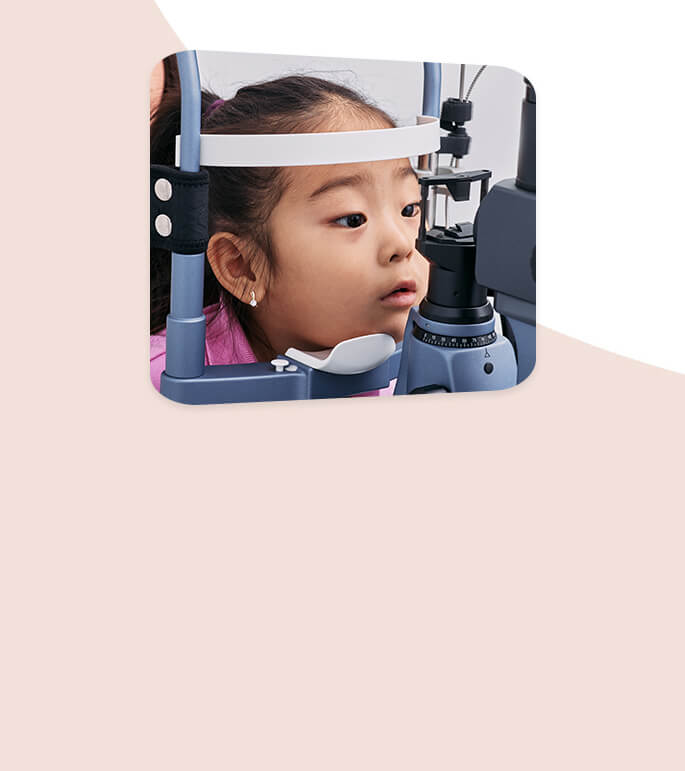
Supporting Your Child’s Visual Development
A child’s vision is a cornerstone of their growth and learning. Children rely heavily on their visual skills to succeed in the classroom, excel in sports, and engage in extracurricular activities. However, children have difficulty expressing that they are struggling to see, as they may assume everyone views the world the same way they do.
Routine eye exams with an optometrist are the most effective way to monitor if your child is reaching the appropriate visual milestones for their age and stage of development. By identifying potential issues early, we can help provide the support they need to navigate their world with confidence.
To support your child’s vision, schedule an eye exam at one of our convenient locations across Greater Los Angeles. Contact us to book their appointment today.
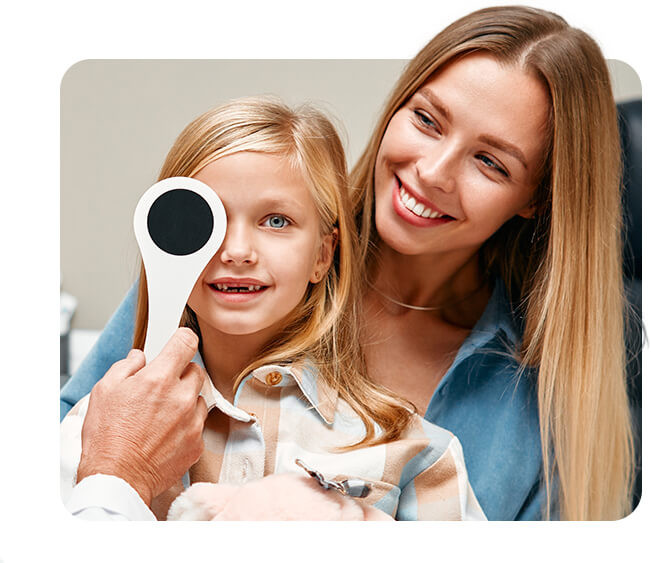
How Often Does My Child Need an Eye Exam?
Just like the rest of their bodies, a child’s eyes grow and change rapidly. Routine eye exams are essential for monitoring this quick development.
Regular screenings help verify that your child isn’t dealing with an undiagnosed vision concern that could be holding them back from their full potential. We recommend consistent, annual checkups to track their visual milestones as they progress from infancy through their school-age years.
Common Symptoms of Vision Problems in Children
Because children often lack a frame of reference for “clear” vision, they may not realize their sight is blurry or strained. Instead of complaining about their eyes, they may exhibit behaviors that seem unrelated to vision. Some symptoms to watch for include:
- Holding books or tablets very close to their face
- Frequent eye rubbing or blinking
- Closing or covering one eye to see better
- Headaches, especially after school or reading
- A short attention span during quiet, visual tasks
- Losing their place while reading or using a finger to track words
Children may experience vision problems due to refractive errors, like nearsightedness, as well as visual development problems, like lazy eye or crossed eyes.
These are common refractive errors where the shape of the eye prevents light from focusing correctly. Nearsightedness (myopia) makes it difficult to see the board at school, while farsightedness (hyperopia) can make reading or close-up homework exhausting for a child’s eyes.
Additionally, myopia can progress quickly during childhood, leading to frequent changes in prescription, consistently worsening eyesight, and an increased risk of serious eye conditions in adulthood. Our myopia control program is designed to help slow this progression, stabilizing their prescription and preserving their eye health.
Often referred to as “lazy eye,” amblyopia occurs when the brain favors one eye over the other, leading to reduced vision in the weaker eye. Amblyopia does not get better on its own. If not addressed during the early years of development, the brain may permanently ignore the input from the affected eye.
Amblyopia can be treated with prescription glasses, eye patching, and vision therapy.
Strabismus is a condition where the eyes do not align properly and point in different directions. Sometimes referred to as crossed eyes, strabismus can actually cause one eye to turn in, out, up, or down, which can interfere with depth perception and lead to the development of amblyopia.
Strabismus requires treatment to improve. Some treatment methods include prescription eyewear, vision therapy, and, in rare cases, eye muscle surgery to improve coordination.
The Connection Between Vision and Learning
Vision is about much more than just seeing clearly at a distance; it involves how the eyes work together and how the brain processes visual information. Difficulties with eye teaming (how well the eyes work together), eye focusing (how easily the eyes can focus on one object to another), and eye tracking (how well the eyes can follow a moving object or a sentence across a page) are just as important to address as blurry vision.
Poor vision can have a significant ripple effect on a child’s life, impacting their academic performance, coordination in sports, and even their social interactions. Making sure a child’s vision is both clear and functional is imperative for their success and overall well-being in and out of the classroom.
Schedule a Visit with Opticore Optometry Group
Early intervention is the key to maintaining your child’s visual health and supporting their journey through school and play. By staying proactive with pediatric eye exams, you provide your child with the visual tools they need to explore the world clearly. Our team is dedicated to providing a warm, approachable environment for our youngest patients across our various Greater Los Angeles offices.
Contact us today to book an appointment at the location nearest you.

Find Your Perfect Fit
with Contact Lenses
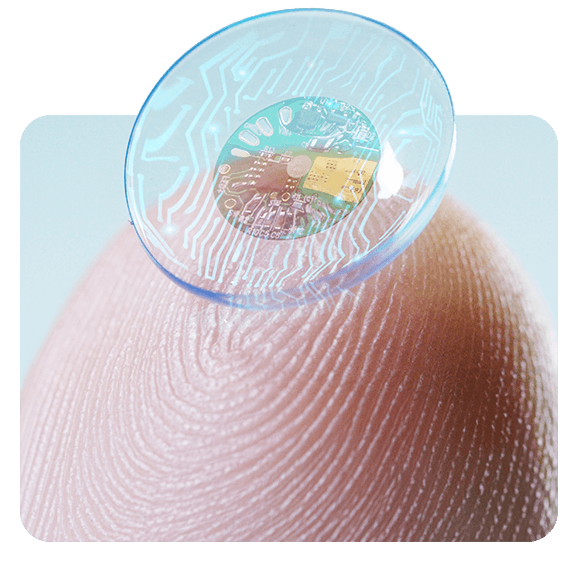
Contact lenses can provide you with a convenient and flexible alternative to glasses for clear vision. At Opticore, we provide dedicated contact lens exams and fittings to find the right style of lens for your vision needs.
Our optometrists provide a thorough exam that assesses your eye health, measures your contact lens prescription, and precisely maps the shape of your eye to find the perfect fit. Each of our locations also offers a local contact lens ordering system, making it easy for patients to reorder lenses through their preferred clinic.
Whether you are a first-time contact lens wearer or a seasoned pro, our team will work closely with you to make sure that your lenses are providing you with the visual clarity and comfort you deserve.

Visit an
Opticore Location
Near You
Our Featured Contact Lens Partners


See What Our Patients
Are Saying