Protecting Your Sight Through Early Detection
According to the CDC, millions of Americans live with eye diseases that can lead to significant vision impairment. Many of these conditions, such as glaucoma or macular degeneration, often develop without noticeable symptoms in their early stages.
If left undetected, these conditions can lead to irreversible vision loss. However, many eye diseases can be managed effectively to help preserve your vision, especially when they are identified early. Routine comprehensive eye exams remain the most effective way for you to stay ahead of potential problems and maintain your ocular health.
Ready to book your family’s eye exams with us? Contact us or book directly with your nearest Opticore location.
Why Are Eye Exams Important?
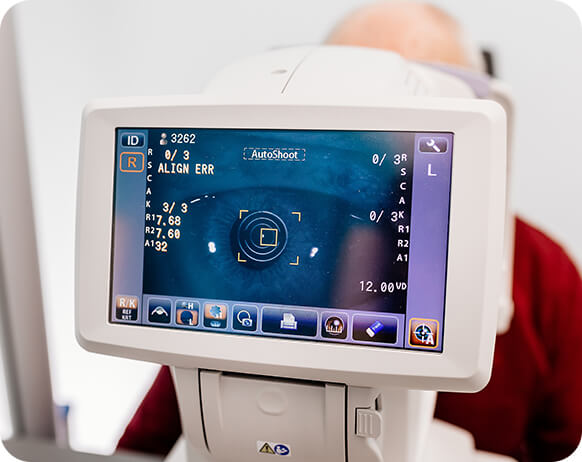
A comprehensive eye exam goes much deeper than simply checking your ability to read a vision chart. These visits involve detailed evaluations of your internal eye structures, including the retina, lens, blood vessels, and optic nerve.
By looking closely at your eyes, your optometrist can identify subtle changes or signs of disease before you ever notice a change in your vision. Early identification of eye disease leads to better outcomes and is a vital step in preventing vision loss, as it allows your eye care team to build a management plan while the condition is most treatable.
Common Eye Diseases We Manage
Our clinical team is experienced in the long-term management of various ocular conditions. From glaucoma and age-related macular degeneration to cataracts and diabetic eye disease, our experienced optometrists work together with our diagnostic technology to perform a detailed exam of your eye health and screen for these sight-threatening conditions.
If you have been diagnosed with an eye disease, we will work closely with you to monitor its progression and adapt your care plan as your needs change. This may include updating your exam schedule for more frequent appointments or referring you to a local specialist in the area.
Glaucoma is a group of eye conditions that damage the optic nerve, often due to abnormally high pressure inside the eye. Because this damage usually affects the peripheral vision slowly and subtly, you might not notice a change until the condition is advanced.
Our management approach includes regular eye pressure screenings, visual field testing, retinal imaging, and OCT scans, both to detect signs of glaucoma and to monitor the condition after diagnosis.
After diagnosis, we can prescribe medications to lower eye pressure and provide co-management for surgical procedures if necessary.
A cataract is a gradual clouding of the eye’s natural lens, which can make your vision feel blurry, hazy, or less colorful. Cataracts are a natural part of aging, although certain conditions and medications can cause them to form earlier.
During your exams, we monitor the density of the cataract and provide regular eyewear updates to help you see as clearly as possible. We also provide education on lifestyle adjustments that may slow progression.
When a cataract begins to interfere significantly with your daily activities, we can refer you to a cataract surgeon, and we will help you navigate the next steps of your care.
AMD affects the macula, the small central portion of the retina responsible for sharp, detailed vision. There are two forms: dry AMD, which is more common and progresses slowly, and wet AMD, which is rarer but can progress rapidly.
We provide detailed screenings to track changes in your eye health and offer nutritional counseling to support your eyes’ natural defenses against the dry form of the disease.
If your condition progresses to wet AMD, we provide a referral to a specialist for advanced treatments. Staying consistent with your appointments allows us to detect these shifts early.
Diabetes can cause significant damage to the delicate blood vessels within the retina, leading to a range of complications known as diabetic eye disease. We provide tailored exams that focus on the specific risks associated with diabetes.
Our team also manages treatment coordination with a specialist as needed to address issues like retinal swelling or bleeding. These regular checkups are a critical component of your overall diabetes management plan.
How Our Technology Monitors Eye Disease
Our investment in innovative eye care technologies allows us to provide a more detailed analysis of your health than a standard exam. These tools are particularly beneficial for individuals at higher risk for eye disease, as they allow us to see structural changes at a microscopic level.
These tools also help us monitor your eyes after a diagnosis, allowing our team to track the efficacy of your treatment plan and make adjustments as needed.
Using the Optos Daytona device, we can capture an ultra-widefield image of your retina without always needing to dilate your pupils. This technology allows us to screen for any problems in the retina, as well as signs of systemic issues like hypertension and diabetes. It provides a permanent digital record that we use to compare your eye health from year to year.
Retinal imaging helps us detect signs of diabetic eye disease, AMD, and glaucoma.
Tonometry measures the internal pressure of your eye. During this test, we use a specialized probe to gently measure the resistance of your eye, which helps us screen for glaucoma. Accurate pressure readings are essential for determining if your eyes are at risk for optic nerve damage.
The visual field analyzer maps your entire range of vision, including your peripheral (side) sight. This test is a primary tool used to screen for and monitor glaucoma, as well as other conditions that may affect your visual pathways. It helps us detect blind spots that you may not even be aware of yet.
Optical coherence tomography (OCT) uses light waves to create high-resolution, cross-sectional images of your retina. This allows us to see beneath the surface to screen for AMD, diabetic eye disease, and early signs of glaucoma by measuring the thickness of the retinal layers.
Dedicated Vision Care for Your Future
Managing an eye disease requires a partnership built on trust, technology, and consistent monitoring. Our goal is to provide you with a clear understanding of your ocular health and a management plan that fits your life. By using modern diagnostic tools and tailored care strategies, we work to protect your sight and help you maintain your independence for years to come.
Whether you have a family history of eye disease or are simply due for your annual checkup, our team is here to support you. We have multiple convenient locations throughout the Greater Los Angeles area equipped to provide comprehensive medical eye care. Contact us today to book an appointment at the clinic nearest you.


Find Your Perfect Fit
with Contact Lenses
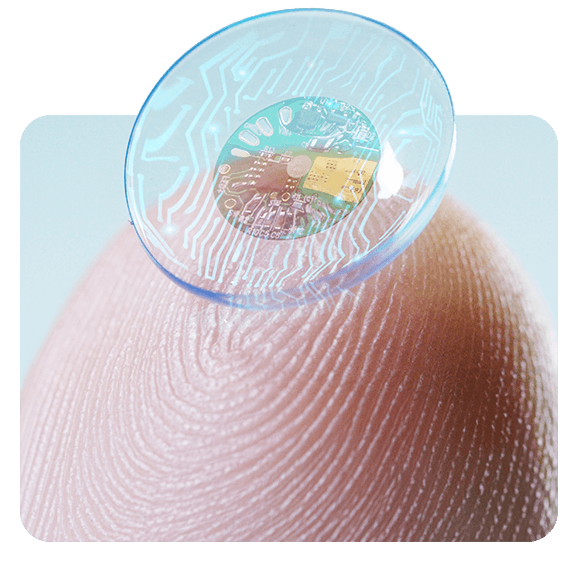
Contact lenses can provide you with a convenient and flexible alternative to glasses for clear vision. At Opticore, we provide dedicated contact lens exams and fittings to find the right style of lens for your vision needs.
Our optometrists provide a thorough exam that assesses your eye health, measures your contact lens prescription, and precisely maps the shape of your eye to find the perfect fit. Each of our locations also offers a local contact lens ordering system, making it easy for patients to reorder lenses through their preferred clinic.
Whether you are a first-time contact lens wearer or a seasoned pro, our team will work closely with you to make sure that your lenses are providing you with the visual clarity and comfort you deserve.

Visit an
Opticore Location
Near You
Our Featured Contact Lens Partners



See What Our Patients
Are Saying